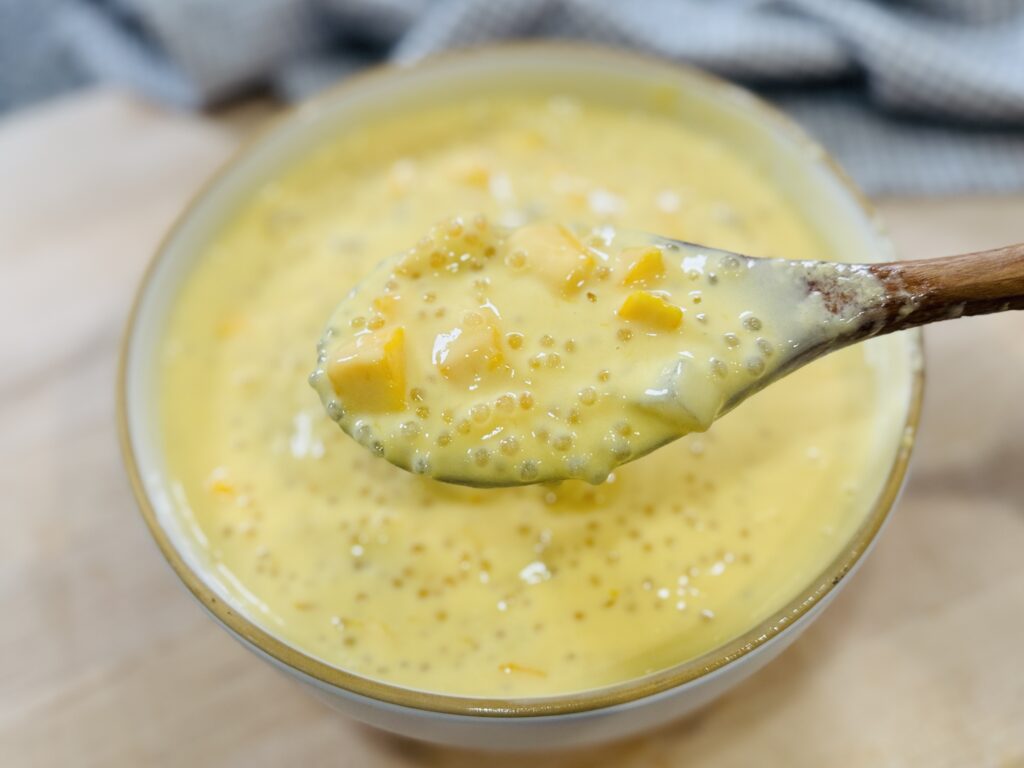
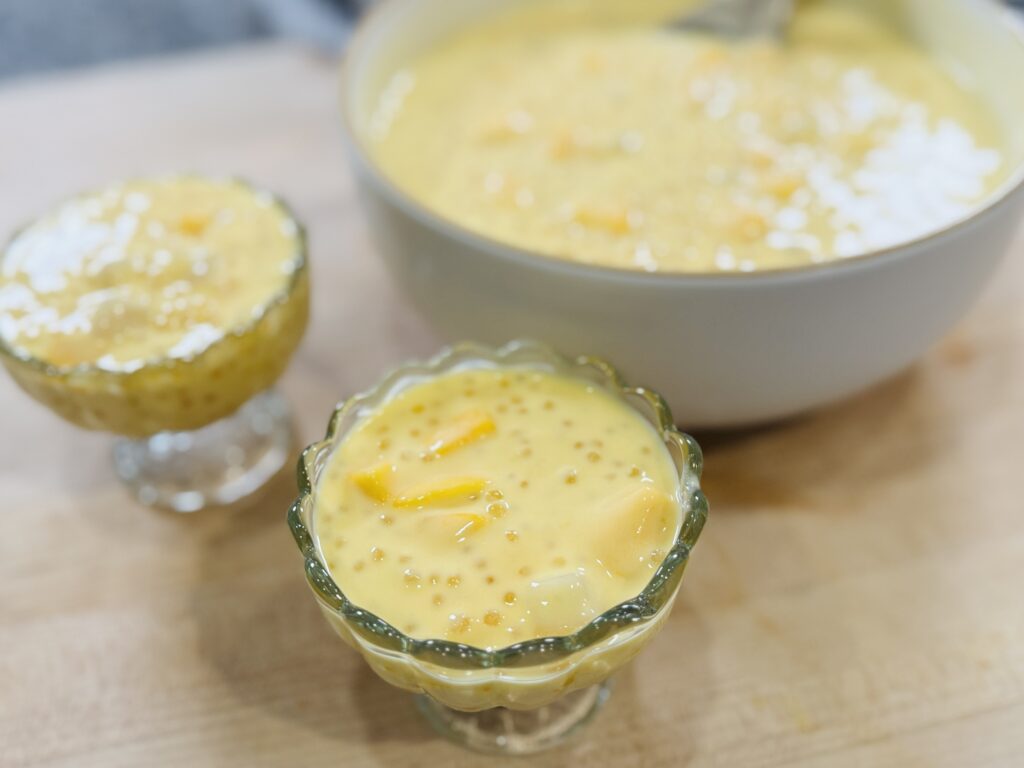
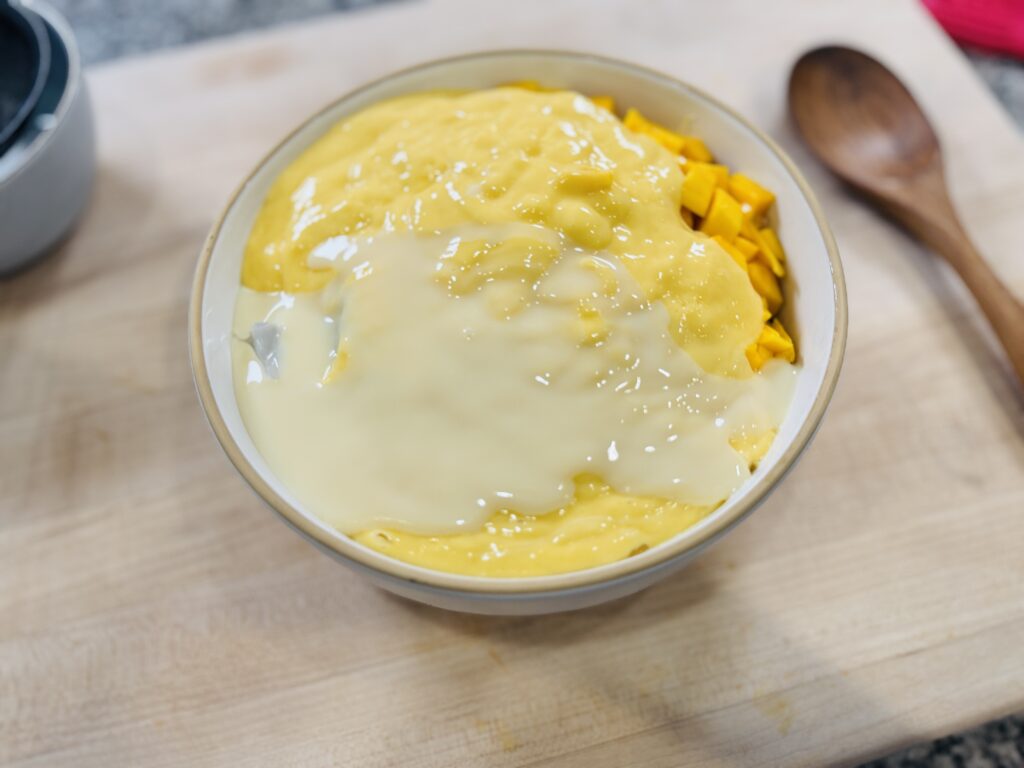
Mango sago is one of those desserts that disappears fast whenever I bring it to a party. It’s cold, creamy, a little chewy from the sago pearls, and loaded with sweet mango in every bite — basically like a cold mango soup. I make a big batch because it never lasts, but if you’re cooking for a smaller group, this recipe halves easily without any issues.
What Is Mango Sago?
Mango sago is a chilled Asian dessert (sometimes called mango sago soup or mango sago pudding) made from ripe mango, coconut milk, sago pearls, and a touch of sweetened condensed milk for richness. It’s similar to mango pomelo sago found at Chinese dessert shops, but this version leans into a creamier, coconut-forward flavor. It’s naturally gluten-free, no-bake, and comes together mostly hands-off.
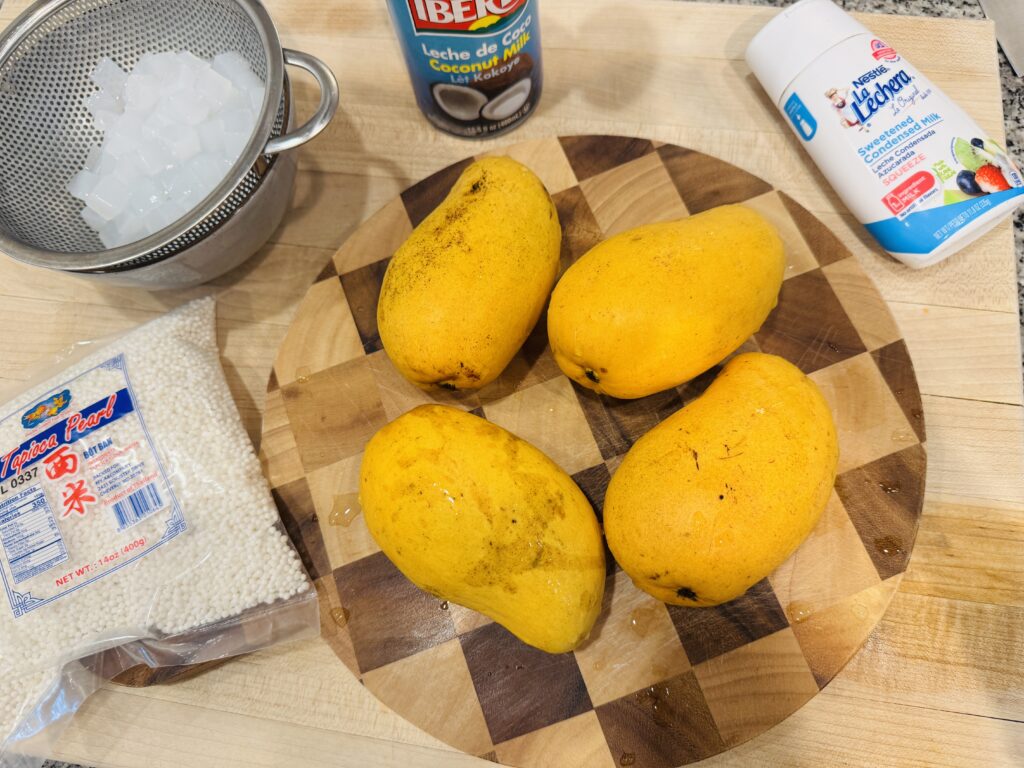
Ingredients for Mango Sago
- Honey mangoes, chopped into bite-sized cubes
- Sago (small tapioca pearls)
- Coconut jelly, with the syrup reserved
- Coconut milk
- Plain milk
- Sweetened condensed milk (add more to taste)
- Ice
A note on mangoes: I highly recommend honey mangoes for this recipe — I usually grab mine from Costco. That said, any mango variety will work as long as it’s ripe. Look for mangoes that give slightly when you press them; a mango that’s still firm won’t have the sweetness or texture you want here.
A note on coconut jelly: I usually find coconut jelly at the Asian supermarket (H Mart carries it), but stock can be hit or miss. When my local store is out, I order it from Amazon instead — I’ll link the exact one I use in my Amazon storefront.
Not a coconut fan? The coconut flavor in this recipe is fairly subtle, but if you’re sensitive to it, you can swap the coconut milk for evaporated milk instead. It’ll still be creamy and delicious, just without the coconut notes.
Switch up the sago: Plain sago is the classic choice here, but you can find flavored and colored sago pearls too — strawberry and honeydew are both fun options, or try mixing a few different fruits for a more colorful, playful dessert.
How to Make Mango Sago
Cook the Sago
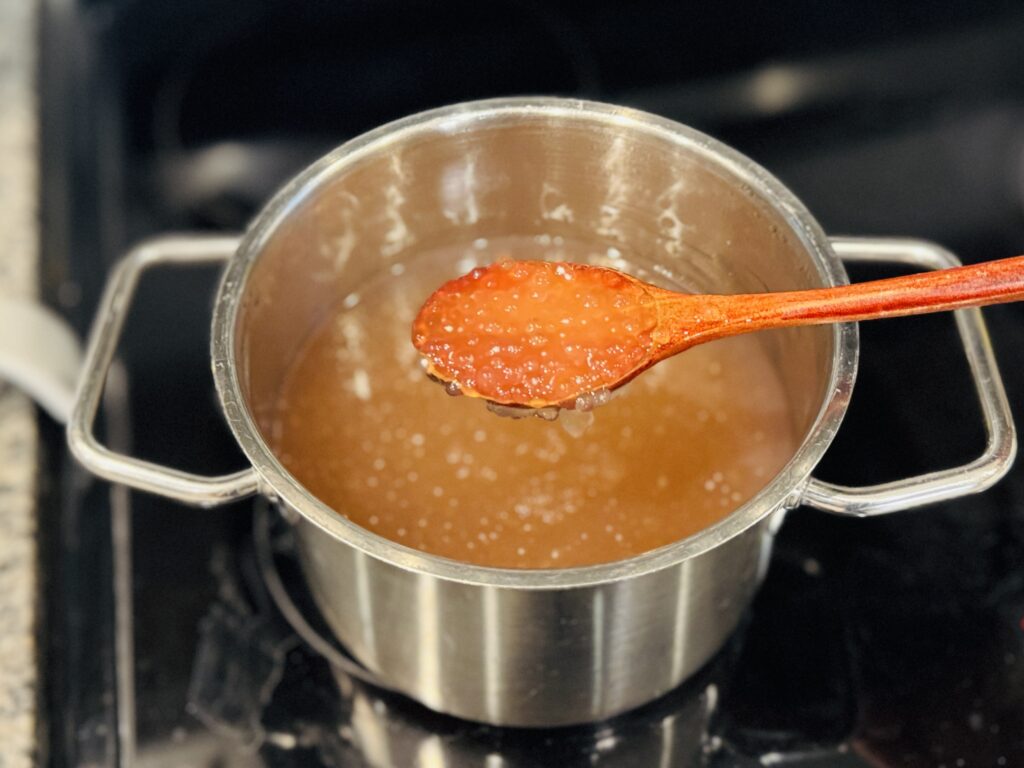
- Bring 8 cups of water to a boil and add the sago. Boil for 15 minutes, stirring every 1–2 minutes so the pearls don’t clump or stick to the bottom of the pot.
- Cover with a lid, remove from heat, and let sit for another 15 minutes. Drain and rinse with cold water, then set aside.
Make the Mango Coconut Blend
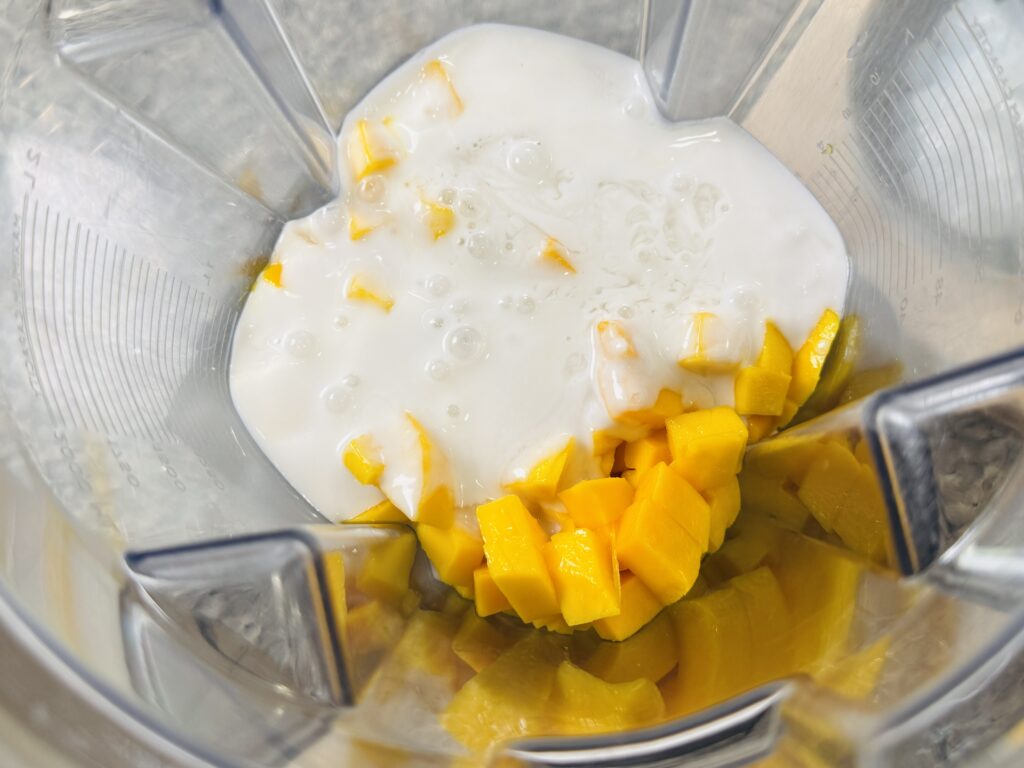
- In a blender, combine about 2 cups of the chopped mango with the can of coconut milk. Blend until smooth.
Combine Everything
- In a large bowl, combine the cooked sago, remaining chopped mango, the mango coconut blend, coconut jelly and syrup, sweetened condensed milk, and regular milk. Taste and add more sweetened condensed milk if you’d like it sweeter. If it needs a little extra flavor, stir in some of the reserved coconut jelly syrup.
Chill and Serve
- Chill for at least 3 hours, preferably overnight, to let the flavors meld. Add ice right before serving, then ladle into cups or individual bowls.
Tips for the Best Mango Sago
- Rinse the sago well. After boiling, rinse the sago pearls under cold water until the water runs clear. This washes off excess starch and keeps them from clumping together in the fridge.
- Taste before you chill. Sweetness varies by mango ripeness, so taste the mixture before it goes in the fridge and adjust the condensed milk then — it’s easier to fix now than after everything’s set. You may also want to add a few splashes of the reserved coconut jelly syrup for a more pronounced sweetness.
- Don’t skip the chill time. Sago sets up and the flavors meld as it sits, so give it the full 3 hours minimum. Overnight is even better.
- Add ice last. Mixing ice in too early waters everything down. Stir it in right before serving instead.
Mango Sago FAQs
What is mango sago? Mango sago is a chilled dessert made from ripe mangoes, coconut milk, sweetened condensed milk, and small tapioca pearls (sago). It originated as a Cantonese dessert in Hong Kong in a simpler, pomelo-free version like this one.
What’s the difference between sago and tapioca pearls? Traditional sago comes from the pith of the sago palm, while tapioca pearls (the kind used in bubble tea) are made from cassava root starch. Traditional sago can be difficult to obtain and thus are often substituted with tapioca pearls. They look and cook almost identically, and you can substitute one for the other without much difference in taste or texture — this recipe works with either.
What’s the difference between mango sago and mango pomelo sago? Mango pomelo sago is the original Hong Kong version, with pomelo (or grapefruit) segments added for a tart, slightly bitter contrast to the sweet mango and coconut. This mango sago recipe skips the pomelo, so it’s sweeter and more mango-and-coconut forward.
Why is my sago clumping or staying hard in the middle? This usually means it needs more soak or simmer time, or wasn’t stirred enough while boiling. Stir every 1–2 minutes while it boils, and be sure there is plenty of water in the pot. Don’t skip the resting period off the heat — that’s what fully cooks the centers through.
Which mangoes work best for mango sago? Sweet, non-fibrous varieties are best — honey mango (my go-to), Ataulfo, and Alphonso all work well. The main thing is ripeness: a firm mango won’t give you the sweetness or smooth texture this dessert relies on.
Can I make mango sago ahead of time? Yes — it’s actually better made ahead, since chilling lets the flavors meld. It keeps in the fridge for a few days; just hold off on adding ice until you’re ready to serve.
Why did my mango sago get so thick in the fridge? Sago naturally thickens as it chills and continues to sit, since the pearls keep absorbing liquid. If it’s thicker than you’d like after chilling, just stir in a splash more milk to loosen it back up.
Can I make this vegan or dairy-free? Yes. Swap out the regular milk for full-fat coconut milk. You can also use a dairy-free condensed milk alternative. The texture stays creamy, just without the dairy.
Mango Sago
Ingredients
- 6 honey mangoes chopped into bite-sized cubes
- 1/2 cup sago small tapioca pearls
- 1 pack or can coconut jelly plus 1/3 cup of the syrup 12.7 oz
- 1 can coconut milk 13.6 oz
- 2 cups milk
- 1/2 can sweetened condensed milk plus more to taste
- Ice
Instructions
- Bring 8 cups of water to a boil and add the sago. Boil for 15 minutes, stirring every 1–2 minutes so the pearls don't clump or stick to the pot.
- Cover with a lid, remove from heat, and let sit for 15 minutes. Drain and rinse with cold water; set aside.
- In a blender, combine 2 cups of the chopped mango with the can of coconut milk. Blend until smooth.
- In a large bowl, combine the cooked sago, remaining chopped mango, mango coconut blend, coconut jelly, 1/3 cup of the coconut jelly syrup, sweetened condensed milk, and regular milk. Taste and add more condensed milk if needed.
- Chill for at least 3 hours, preferably overnight. Add ice just before serving and ladle into cups or bowls.
Notes
- Recipe yields a large batch; halve all ingredients for a smaller portion.
- Sensitive to coconut flavor? Sub evaporated milk for the coconut milk.
- Any ripe mango variety works if honey mango isn't available.
- Coconut jelly can be found at Asian grocery stores (H Mart) or ordered online.


Leave a Reply